Pages

Showing posts with label Animals. Show all posts

Thursday, April 18, 2013

Tempest: Before and After

    I have very self-consciously not posted anything on this blog for some time. Partly because, as I stated in my last entry, I didn't want to give anything away to the audience before they had the opportunity to see the show. Another element in this decision was knowing how involved a process this build would be. In short, you can either talk about swimming the English Channel, or start swimming. You can not do both at the same time. Now that the dust has settled, and the final curtain has come down, I can discuss a little of my process and display some of the results here.

    It should be noted I can only speak to MY end of the creative process of The Tempest, because that is the only part I was wholly involved in, and thus,fully understand. Nobody should ever make the mistake of believing that I accomplished anything on my own. Theatre is by it's very nature, a collaborative process. This show was the work of many hands. I am deeply grateful to everyone who participated in The Tempest. It would have been a very different entity  if even one of the 30+ people involved were not a part of it. I intend to give full credit to certain key players in a later post. For now please accept my deepest gratitude and know that you made this show both nothing like I expected and everything I could have hoped for.

Last November I posted a few of my early process shots. I thought I would begin by showing you what these puppets look like now that they are complete. If you want to see the drastic changes these have undergone you can check out my original blog here

First here is one of the two seagulls that were in the show. They have come quite a long way from the bald foam. If you look carefully, you can see that two of the rods have been repaired. I wish that I had managed to take better pictures during the show and rehearsals. one of the most enduring images of this production for me was this seagull silhouetted against the purple lit Cyc curtain.


Next here is the head of our heron. Because of his "eyebrows" and the funny walk the puppeteers found for him during rehearsal, he has been christened "Groucho". Notice that he has different eyes from the original process shot.  Also. the puppeteer who operated him found the original controls cumbersome. I needed to shorten them for her ease of manipulation and comfort


 Finally, Trinculo. Aside from one stage, Trinculo was the "guinea pig". He defined the look and feel for the rest of the human characters for me, I only wish I could take credit for the beautiful costumes of these puppets, but they are the work of Kristen Palazzoli. I will discuss them in great length later. The hair turned out nothing like I planned, but in retrospect, couldn't have logically been any different.


More later. Thanks to all!

Tuesday, October 23, 2012

Sketchbook Project: Inner cover- The Big Reveal

The more I thought about it, the more obvious it was to me which topic I should chose for the Sketchbook Project.

Dinosaurs.
Dinosaurs are cool.

Not only that they're a good conduit for some of my obsessions:
Birds
Bestiaries and field guides
Dragons
Comparative Anatomy

     To be honest during my childhood, I never had the typical all-consuming obsession with dinosaurs that boys are supposed to, but, then dinosaurs were much different back then. I liked them, to be certain and had my favorites, but back then dinosaurs were thought of as huge lizards, cumbersome slow and stupid. I was always more interested in behavior. Elephants and lions were more intriguing and tangible to me. Suddenly in the nineties,  dinosaurs were reshaped as though they were made of Plasticine. Lumbering cold blooded  prehistoric monsters became active, agile, well adapted animals with complex social structures. Dragging tails lifted from the ground to become elegant counterbalances. sprawling legs straightened and became muscular running limbs. Chest cavities expanded to make room for the big hearts and lungs of warm blooded creatures. Dinosaurs became beautiful and fascinating, more like birds than reptiles.

    Today with the combination of new technology and amazing recent discoveries out of the deserts of Mongolia and China, dinosaurs are wilder and more wonderful than I could have ever imagined. We've discovered astounding new species and reexamined what we believed we knew. There are answers to puzzles we thought unsolvable, and exiting new lines of inquiry to explore.
In my sketchbook, I intend to concentrate mostly on the most birdlike aspect of dinosaurs- feathers. This will give me a focus and the chance to investigate some of the most captivating current notions. I intend to be as accurate as possible using the most up to date information available, but inaccuracies are inevitable as new discoveries surface. Even the great Charles R. Knight couldn't avoid this.


The color of the cardboard cover reminded me of the sort of stone where you might find fossilized tracks. I liked the monochrome of the inner cover, so I drew  with coffee. The drawing is bisected by the pages so that you can't immediately see what is casting the shadow.
The dinosaur casting  a long shadow is Compsognathus. They were small theropod dinosaurs about the size of a chicken. He is following the footprints of a Greater Rhea, a South American cousin of the ostrich. Without giving too much away, this is not going to be my last bird/dinosaur juxtaposition.


There you have it. My Sketchbook Project is officially underway. More updates coming soon!


Sunday, October 14, 2012

Crittercam: The new girls

    I've been remiss. It's been two months since I last posted anything here. the reasons for my neglect are complex and diverse. If you are well enough acquainted with my recent history, you may already understand some of them. I hope you will not take it personally that I chose not to describe them here. I'd just like to take a moment to apologize to the regular readers of my blog . Ill try to be more consistent in my posting habits from now on...for both of you!

    As you may already know I keep a small zoo in my apartment. It currently consists of a lizard,a tree frog, some fish and birds. I don't ordinarily write about them because quite honestly they don't do very much that's interesting. I also don't want this to turn into one of those bizarre obsessive blogs that catalog every detail of the lives of somebody's pets. I figure enough people already don't read this thing.

   Having said that, occasionally something cool does happen with the menagerie that I'd like to share even if I'm the only person who's interested. Such is the case today. Today I finally got a pair of female Lady Gouldian finches. I've had two males for a while now and have been looking for potential mates for my boys for a couple years (living in a small town in Upstate NY may have it's advantages, but it does make it a little challenging to obtain exotic birds). I thought it would be a nice way to ease back into posting to put up a few shots of my birds. The birds had different ideas about that. I picked out some of the better pictures of my uncooperative little subjects from today. Bear in mind none of this is what you'd exactly call "great photography" 

The breeder I went to had a lot of cool mutations and color variations available. I stuck as close to the "standard" variations as possible. I like holotypes. The black headed variety is apparently more common in the wild and the red heads are more common in captivity. Gouldian Finches are endangered in their wild habitat. It should be mentioned here that Australia has had a very sensible export ban in place for it's native fauna since 1959. Since finches in general only live about 15 years, and since the person i brought them from is extremely reliable and keeps flawless breeding records, I can guarantee that my birds are captive bred. 

 I like this one, I have no idea what they're looking at


 This is about 10 to 25 percent of what you wind up with when photographing birds: a blurry picture of where the bird was a fraction of a second ago


 Occasionally, and for no readily apparent reason, an animal will suddenly decide that they really hate photography and will do everything in their power to ruin every shot you try to take of them, even going so far as to spontaneously run into pictures of other animals just to make them blurry and unusable. This was the last good picture I was able to get of the black headed one for about an hour.
 Meeting their new cage mates

 A rare family portrait showing all my finches. There are a pair of zebra finches, spice finches and a society finch that share a large flight cage with my Gouldies.
 From left to right: My male Society finch (I'm trying to find a girlfriend for him), the new girls, a female Spice finch and my female Zebra (Her chest is bald because her mate plucks at it. I tried to remove her so that she could regrow her feathers once, but she sulked and was so miserable that I relented and put her back. I'd rather have her look miserable than actually be miserable. I guess that proves finches can be just as stupid as people!)
 Here is my redhead girl next to one of the males. You can really see the difference here!
 I managed to line up a good  picture of the black headed one... then she mooned me.
                                                                   Gotcha!

Friday, April 27, 2012

Bestiary I: The Manthikaar


                                                                 The Manthikaar


Manthikaar (male) in threat display

                                Description:
The manthikaar is a medium sized, muscular species of tiger. Their coats are shaggier (especially in the winter) and more subtly marked than those of other tigers. They are darker orange to crimson in color with dark brown stripes that form a nearly solid chocolate colored patch along the animal's back. The ears are small and dark brown. The underside is whitish in color with white patches of longer fur along it's cheeks, eyebrows and around the mouth and tuft of the tail. These patches are longer and more pronounced in males. Males are also sometimes as much as ten times larger than females. The manthikaar, due to the short, compact shape of it's skull,has a muscular jaw which gives it a powerful bite. The paws are broad and thick making the creature able to climb easily and negotiate drifting sand and snow easily. The unusual tufts of “facial hair” along with the comparatively short muzzle give the manthikaar's face a cantankerous and nearly human appearance, which gives this animal it's name. (In the Muhor language lit.: Manthi=elder[masculine], kaar=sand. Or: Old man of the Desert)

                                                                       Behavior
Not much is known about the manthikaar in the wild as it is a solitary, secretive creature that is primarily nocturnal and prefers inaccessible habitat. They are territorial animals that will aggressively drive away, not only members of their own species, but any other large animal that it considers to be competition. A manthikaar when threatened, will arch its back and hold it's tail over it's body in a manner reminiscent of scorpions, while emitting a series of low coughing growls. If this threat is not heeded, the animal will attack immediately and will persist until the threat is either driven off or killed. Mating occurs in the towards the end of the short rainy season. Courtship is brief as the male and female will only tolerate each other on their territory for short periods. Two to three cubs are born in the spring. They are independent and sexually mature at one year of age, although it is estimated that only forty percent of cubs will reach this age. Manthikaar are hardy resourceful hunters that rely mainly on the traditional feline “ambush “ strategy. It is uncertain how long they can survive without food and water, but it is widely accepted that during lean periods, this animal can lose as much as forty five percent of it's body weight with no apparent ill effects. Their metabolism is thought to slow down to nearly exothermic levels when stressed. Manthikaar have been known to live up to twenty years in captivity. Their lifespan in the wild is unknown.

                                                                        Habitat:
Found throughout the western foothills of the Rusting Mountains and the Great Northern Desert. It prefers rocky, arid terrain relatively close to water.

                                                                           Diet:
The manthikaar is a versatile and opportunistic hunter. From camels to mice, it has been known to eat anything it can catch including wolves, hares, goats, tortoises, unicorns, wild boar, pheasant, mountain oxen, deer, and young dragons. While accounts of predation on livestock are doubtlessly exaggerated, they do take place. More frequently than other big cats, this species will intentionally hunt people. There have also been unconfirmed reports of manthikaar fishing and scavenging.

                                                                           Status:
Locally common

                                                                          Threats:
The manthikaar has fared better than many big cats due to it's secretive nature, fearsome reputation, and local taboos. Development and habitat encroachment have been minor threats due to the rugged terrain preferred by these animals. Still, It's fur is warm, soft, and attractive which makes it prized and a pelt fetches a handsome price. They are also hunted to protect livestock. An adult animal is fairly safe from predation, but cubs and adolescents are threatened by larger predators, such as bears. There has been reliable documentation of instances of an older manthikaar preying on cubs, but these instances of cannibalism are thought to be rare.


                                                   The coming of the Mantakaar
                                                           A Muhor tale

In the time of our Ancestors, There lived a fierce and warlike tribe on the plains to the east. This , you say, is nothing unusual and you are right to think so. On the plains of Kentar, such people grow as plentifully as the golden grasses. This particular tribe that I speak of was so wicked and bloodthirsty, it is said even their own horses were afraid of them. They craved battle as a man in the desert craves water. They swept across the land like a winter storm destroying any who they came upon. Even the other tribes lived in fear of them and would flee when they approached. One day the chieftain of this murderous horde called his men together and spoke to them thus:

“Oh, Brave Horsemen, Mighty warriors, Hear my words! Our shadows have grown too long on these plains. There are none left who has courage enough to face us . It has been a long time since we have tested our strength in battle. We have taken to fighting among ourselves for want of an opponent and I fear our proud people will soon tear ourselves asunder if we continue in this manner. I say let us pack up our encampment, leave the Kentari Plains and look to the west. I hear that on the far side of the towering snow-peaked Rustings, there is a rich and beautiful land of jeweled cities and fragrant gardens. There every woman has the beauty and bearing of a queen in any other land. Why should we not go there and live as kings?”

The fearsome band quickly agreed and set out that day for the foothills of the Rusting Mountains. Now, I needn't tell you how treacherous the mountain passes can be, even when the spirits have not set themselves against you. There are snowstorms,avalanches and biting winds. The passes are narrow and high, with sharp rocks beneath. Wild beasts and demons live there. Only a great fool would attempt to cross the mountains unguided. These tribesmen were born without fear and were ignorant of all of this. They did not know the way or the words to appease the spirits, who were angered by such arrogance. Before long the spirits beset these travelers with the worst the mountains had in store. While they were mighty warriors, a spear cannot fight against weather and hunger. Lost and starving they were forced to eat their horses. Many succumbed to the cold or sickness, or else fell to their demise, leaving their bones to bleach in the sun and be picked clean by the birds. So it was that a journey that should have taken no more than ten days lasted for many months. Fate was kind to our people and merciless to those warriors of the plains.

           When the survivors emerged on the other side those unforgiving peaks , exhausted, battered and only a handful of their former numbers left, they came out too far south. They did not see the shining silver ribbon of the Anajai beneath them, surrounded by the rich green fields and bright roofs of our cities that welcome us home from our wanderings. No, They came out in a place where the hostile red wastelands of the Great Northern Desert stretched from horizon to horizon uninterrupted. The remaining men tore out their hair and bellowed in fury to have traveled so far and so hard through the mountains only to come to an inhospitable barren place. They turned upon their Chieftain with blame in their eyes, In their rage those men tore him to pieces with their bare hands. In that moment they finally became completely uncivilized. The last trace of the tribe's humanity vanished. They turned into wild beasts. Hair sprung from their flesh, their hands turned to claws and their teeth lengthened to fangs. Great curving tails arched over their backs like a scorpion's. Their heads flattened and became empty of any thought but hunger. Their eyes burned with unquenchable anger.
 
       From that time forward, those once haughty warriors skulked in the shadows of night as large wild cats. They shun all company and have become the beast we now call “Manthikaar” This is why the manthikaar's coat is red to remind any who look upon them that these beasts were born of blood and murder. It is said that these animals hate humans particularly and will devour them on sight because seeing people remind them of what they once were, and what they have become. Hunters believe that death reveals it's true appearance. They say just before a manthikaar, dies, or it kills you, the beast will show you his human face. Because of this, and because it's spirit is likely to be vengeful it is unlucky to kill a manthikaar.

                                                                Muhor
         Muhor is a small nation that is situated in the Anajai river valley between the Rusting Mountains and the Great Northern Desert. The Muhor people are hardy and compactly built. They are renowned for being shrewd merchants and skilled craftsmen. Muhor jewelry and leather-work is especially sought after. Muhor is primarily an agricultural economy. The fertile lands near the river are primarily given over to grains and orchards, while the foothills of the Rustings are populated mostly with shepherds and their flocks. Life in the arid lands around the Anajai is harsh and unforgiving. The river is swift, difficult to navigate, and given to frequent flooding. Storms can arise suddenly from the desert to their west and blizzards sweep down unexpectedly from the mountains to the east. Droughts are common. The winters are long and frigid. It is perhaps understandable that the Muhor are inclined to think of the natural word as being cruel and capricious. The main trading routes of the Muhor are either southwards via the Anajai River, Caravans east across the Great Northern Desert, or eastwards through the mountain passes and over the vast Kentari Plains. As the climate of the plains is much more hospitable than that of their homeland, many Muhor have attempted to settle here, only to be driven off by the proud nomadic tribesmen who live there. The tribes of Kentar are also not above raiding a Muhor supply train. Consequently, very little love is lost between the two cultures.

Copyright J. Ryan 2012

Sunday, February 26, 2012

Arizona: A Photo Essay....With Photos!

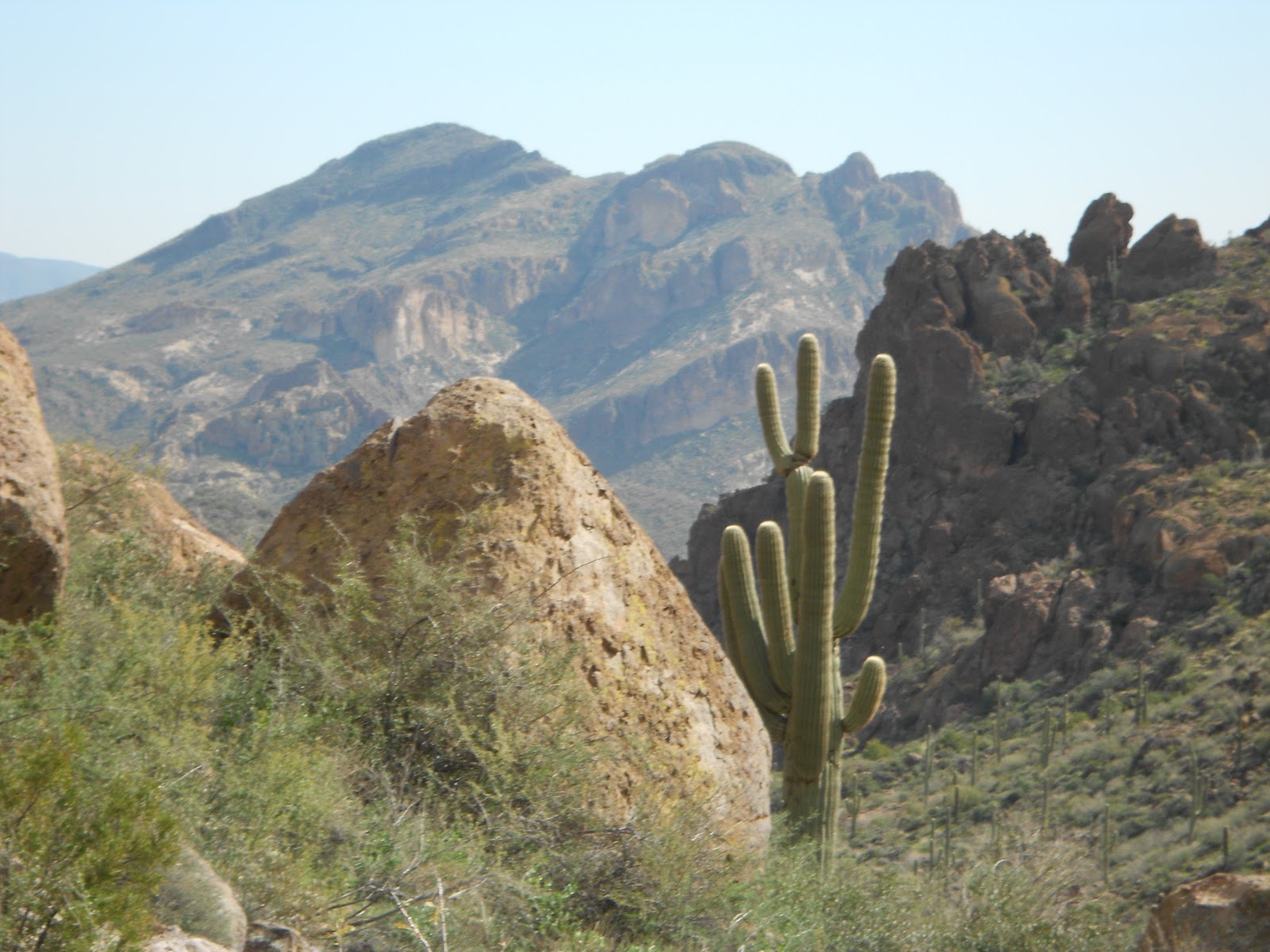
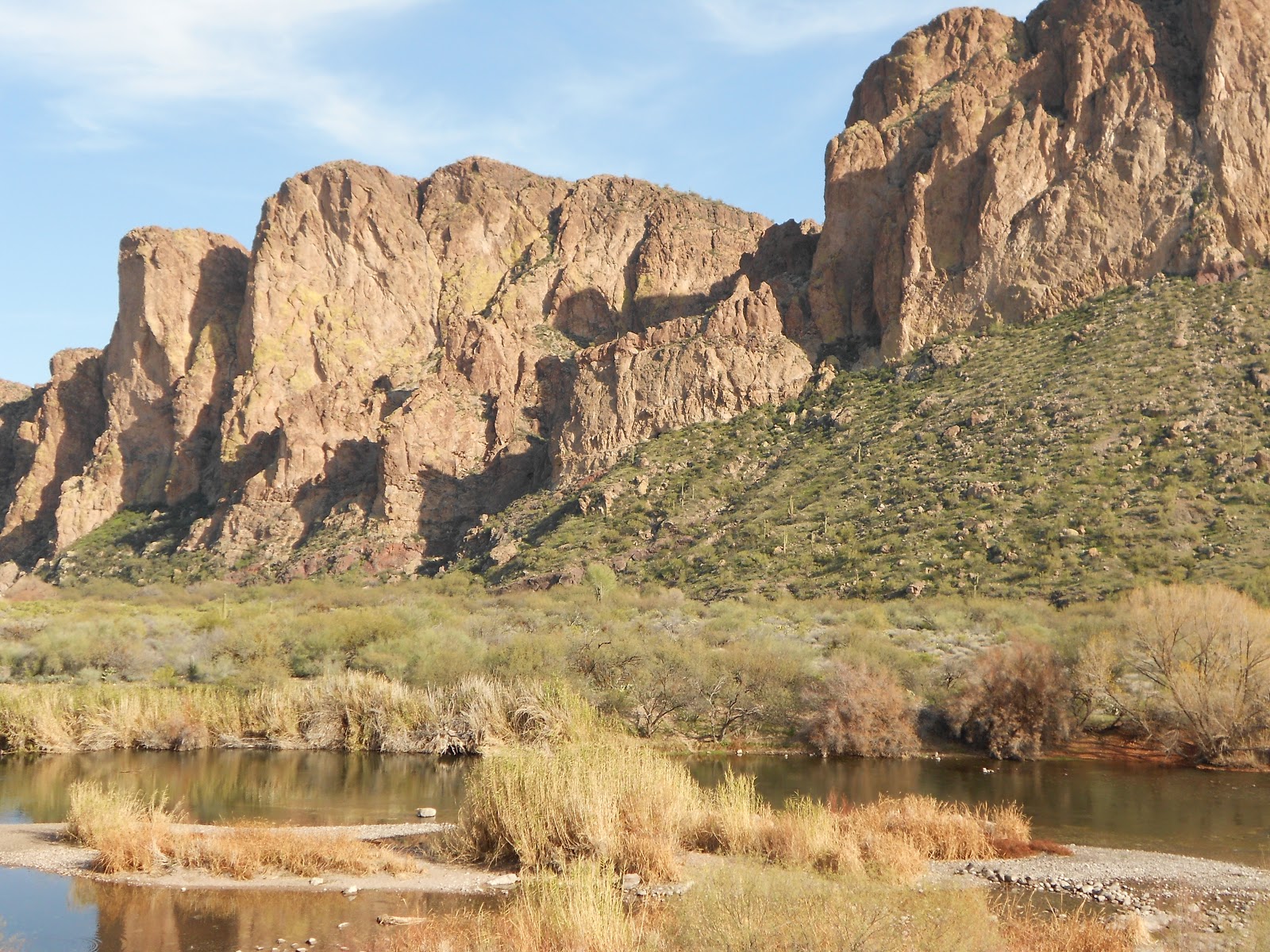
 I have been fortunate in my travels to see many beautiful places, both man-made and natural. among the natural wonders there is something particularly enchanting about the austere rugged beauty of the Southwest I think if I lived out here I would be whip-thin and permanently sun-baked brown as a lizard.  The land here makes me incredibly reluctant to come indoors. Instead of trying to describe it to you with words that really do not do it justice,I will instead post a selection of amateur photos that again really don't do it justice  If you happen to be interested in what I had to write you can always visit this selection from my other blog:Tourist Monkey.This is what I wrote last time I was here and I think it holds up. This post, though I'm going to try to limit myself to captions 


The Sphinx In Peralta Canyon


This is actually the front lawn of the house where I'm staying. All of it looks like this.


Cliff Chipmunk. This is his species, not his name.


Weaver's Needle, Peralta


You're Welcome, Ladies!

The Baboon's Head, Peralta Canyon

Faces are everywhere. It's really the most bizarrely anthropomorphic landscape.  


Agave (I think)


Hoodoos on the March


This is apparently called a Tree Lizard. they are called this because they are never anywhere near trees.


I like the strange candelabra shapes of Saguaro 


Note the Saguaro in the front imitating the rocks


Cacti should not look this cuddly


Saguaro Lake


The bones of a giant


Great Tailed Grackle: A serious contender for the All Southwest Weird Noise-Making title


Mesquite tree ambling along the Salt River